

When Fashion Houses Started Building Homes in Dubai
For most of fashion history, a designer dressed you and then let you go home. What waited behind the front door was someone else’s business, usually an architect’s or a decorator’s.
Dubai quietly rewrote that rule. In a remarkably short time, labels that once lived on runways and shopping streets moved into lobbies, penthouses, and entire skylines.
The result is a new kind of luxury object. You cannot fold it into a suitcase, yet it carries the same codes as a signature bag or a perfectly cut jacket.
How Did a Fashion House End Up Inside the World’s Tallest Tower?
The story usually begins with Giorgio Armani. In 2005, the Italian house partnered with Emaar to develop the Armani Hotel Dubai and Armani Residences inside Burj Khalifa.
It was a daring bet for a designer famous for soft tailoring and quiet greige tones. Yet the logic was clear. Armani already sold furniture and interiors through Armani/Casa, so a complete home was the natural next step.
The interiors read like a menswear collection translated into rooms. Think muted palettes, leather-wrapped walls, and warm wood, all arranged with the same restraint that made his jackets famous.
Other houses were watching. Versace followed with Palazzo Versace Dubai, a waterfront hotel and residences in Culture Village that leans fully into baroque mosaics and Medusa motifs.
After that, the doors opened wide. Roberto Cavalli, Elie Saab, and Karl Lagerfeld each found developers willing to turn a runway signature into marble, lighting, and floor plans.
Each launch was treated like a collection drop, complete with mood boards, signature materials, and a story to sell.
What Makes Luxury Properties in Dubai Feel Like Fashion?
Part of the answer is the city itself. Dubai treats architecture the way a couture house treats a show, as theater designed to be seen and photographed.
The data supports the mood. Citing Knight Frank research, Arabian Business reports that Dubai remains the world’s leading market for branded residences, with 42 percent of its schemes carrying non-hotel names from fashion, motoring, and design.
That shift matters. Not long ago, a branded home here simply meant a hotel flag on the door. Today, the name on the facade is just as likely to belong to a couturier, a jeweler, or a car maker.
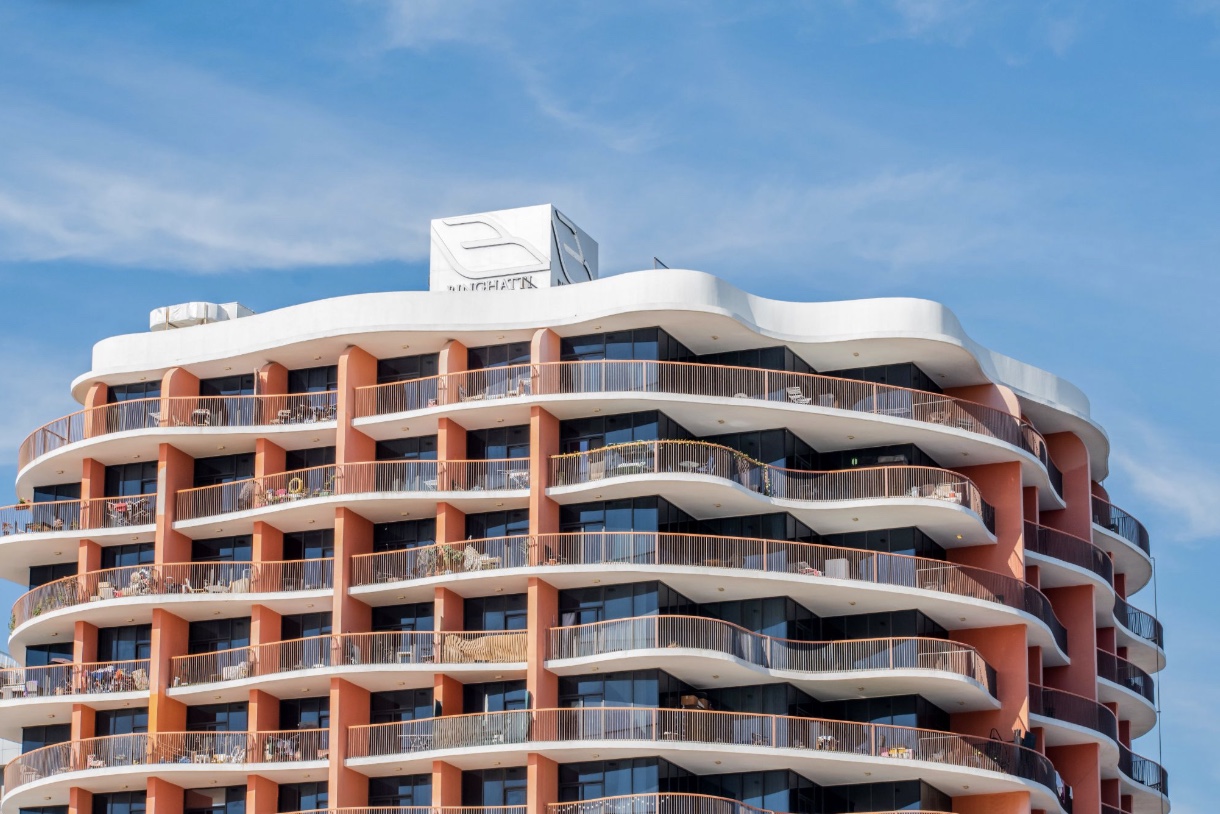
Local developer Binghatti has leaned into this more than most. Its Business Bay towers carry the names of Bugatti and watchmaker Jacob & Co, while a newer project beside Burj Khalifa is tied to Mercedes-Benz.
For readers curious how these partnerships become actual floor plans, it is worth taking time to browse the listings. The range of properties for sale in Dubai runs from compact suites in Jumeirah Village Circle to sky mansions in Business Bay, each marketed with the same care as a new collection.
Seen this way, the apartment becomes the ultimate accessory. It is the one piece you never take off at night.
Why Would a Designer Want Your Front Door?
Licensing fees help, but money is not the whole story. Speaking to WWD, Bernstein luxury analyst Luca Solca said brand elevation is the main reason fashion houses step into real estate.
A home is the strongest proof of a lifestyle. A handbag says you share a taste. A residence says you live inside that taste every single day.
There is a practical side as well. A residence lets a house control the entire experience, from the scent in the lobby to the weight of a door handle. On a runway, that kind of control ends when the lights go up. In a home, it lasts for years.
The appetite is global, too. By the end of 2025, there were 1,907 active and pipeline branded developments worldwide, as Fortune reported. Fashion is only one slice of that figure, but it is the slice with the richest storytelling.
How Do Runway Codes Translate Into Rooms?
Every house brings its own vocabulary. Here is how a few of them speak once the clothes come off the rail and the walls go up.
– Armani relies on restraint. Expect tonal palettes, tactile leather and wood, and furniture that feels tailored rather than decorated.
– Versace goes maximal. Gold detailing, mosaic floors, and the Medusa head turn a lobby into something close to a palace.
– Cavalli borrows from its famous prints. Animal patterns, dramatic lighting, and glossy surfaces bring nightlife energy indoors.
– Elie Saab brings couture softness. Pale stone, delicate textures, and embroidery-like detailing echo his evening gowns.
– Jacob & Co and Bugatti prove the idea has spread beyond clothing. Jewelry cuts and supercar curves now shape facades and interiors in much the same way.
Does the Label Really Add Value?
Buyers certainly behave as if it does. A Savills study cited by AGBI found that branded residences command an average price premium of 33 percent.
For many buyers in Dubai, the brand also works as a shortcut. It signals a certain standard of finish and service before anyone has even stepped inside.
Still, fashion people know better than anyone that a logo can date. Tastes move on, licensing deals expire, and a look that felt daring in one decade can feel like costume in the next.
The strongest projects avoid that trap the way great clothes do. They rely on proportion, material, and craftsmanship, not on a monogram stamped across every surface.
That is why the best fashion homes age like a classic trench coat rather than a seasonal trend piece. The brand opens the door, but the design has to keep you living there.
What Comes Next for the Fashion Home?
The pipeline shows no sign of slowing. Fendi, Missoni, and Versace are among the names attached to new residential projects around the world, and Dubai remains the stage where many of them debut.
Expect the collaborations to get more personal. Some houses now design everything from door handles to bed linen, turning a residence into a complete wardrobe for daily life.
Expect more crossover, too. When a watchmaker can sign a skyscraper, the line between fashion, design, and architecture starts to blur in genuinely exciting ways.
For fashion lovers, the takeaway is simple. The runway no longer ends at the door. In Dubai, it continues up the elevator, across the terrace, and straight into the closet.
