

Semaglutide for Weight Loss: All You Need to Know
People in the fashion industry or planning to be a part of it might be looking for effective weight loss treatments. During their research, semaglutide might pop up in their search results, making them wonder what it is.
Well, Semaglutide is one of the most-talked-about FDA-approved medicines for weight loss, and the hype is real. Though semaglutide is actually meant to treat patients with type 2 diabetes, it is used off-label for weight loss. However, due to the confusing brand names of this medication, it can be hard to decide between semaglutide generic and branded semaglutide alternatives.
Among all this confusion, there are a few common questions that you might want clarity on. This guide does just that. In this article, we will talk about how semaglutide works, what the research says, its common side effects, and who should and who should not use it.
What Is Semaglutide and How Does It Help You Lose Weight?
Generic semaglutide or its branded version, Ozempic, has the same active ingredient, Semaglutide, meant for chronic weight management and to treat type 2 diabetes.
These medicines were originally developed as diabetes drugs and belong to a class called GLP-1 receptor agonists. However, it is now widely prescribed to help adults lose weight. GLP-1 agonists mimic the GLP-1 hormone that is released after eating.
Talking about Semaglutide, it works by stimulating insulin secretion when blood sugar is high. This, in turn, suppresses glucagon production and slows down stomach emptying, making you feel fuller for a longer duration by acting on brain centers that control appetite.
In short, if you are on semaglutide, you eat fewer calories, feel full faster, and experience fewer food cravings throughout the day.
How Effective Is Semaglutide for Weight Loss? (Including Non-Diabetics)
Based on Semaglutide weight loss reviews, it is evident that it leads to significant weight loss in adults with and without diabetes. The typical dose of semaglutide for weight loss is 2.4 mg weekly, which is administered as a subcutaneous injection.
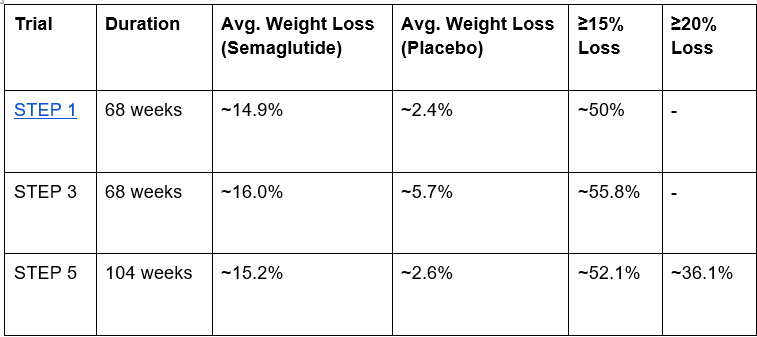
Here’s what the key STEP clinical trials found in non-diabetic adults with overweight or obesity:
Individuals who took part in this trial lost about 12.6 kg on average and half of participants lost around 15% of total body weight after 68 weeks of using semaglutide. The best practice here would be to practice a healthy lifestyle for significant weight loss.
If you are on the maintenance dose, i.e., 0.25 mg, you won’t see full results until you are titrated up to the maintenance dose for several months. Recently, the U.S. Food and Drug Administration approved a new higher dose (7.2 mg) of Wegovy (semaglutide) injection, called Wegovy HD, for weight loss and long-term maintenance of weight loss for certain adult patients.
What Happens When You Stop Taking Semaglutide?
Data from the STEP 1 extension shows that individuals who participated in the trial regained around 2/3rd of the lost weight within a year of stopping the drug. This means that even if you have stopped taking the medicine, you must not stop tracking food intake, regular exercise, and eating habits. Sticking to a healthy lifestyle is the key to losing weight and managing it after stopping the weight loss treatment.
Safety, Side Effects, and Who Should (and Should Not) Use Semaglutide
Though semaglutide is very effective for weight loss, it is a prescription-based medicine and may pose real risks. Semaglutide side effects are quite similar to diabetes medication side effects. Your decision to take semaglutide should always involve a prescription from a licensed healthcare professional.
Common side effects
These side effects are usually mild-to-moderate, especially during dose increases:
– Nausea, vomiting, diarrhea, constipation
– Stomach pain, bloating, decreased appetite
– Fatigue and mood changes
These often improve with slow dose titration and eating habits. Individuals on generic semaglutide should eat small or lower-fat meals.
Less common but serious side effects
– Pancreatitis
– Gallbladder disease (gallstones, cholecystitis)
– Kidney injury from severe dehydration
– Boxed warning for thyroid C-cell tumors (observed in rodents)
Weight loss medications can cause serious side effects if misused. FDA recommends semaglutide for weight loss under specific criteria, and weight loss medications are only suitable for some individuals.
Who should avoid semaglutide:
– People with a personal or family history of medullary thyroid carcinoma or MEN2
– A history of pancreatitis
– Severe gastrointestinal disease like gastroparesis
– Anyone pregnant or planning to become pregnant
Always talk to your primary care physician before starting treatment related to weight loss or diabetes. The effort to achieve and maintain a healthy weight is real, but not unachievable.
