

From Runway to Everyday: How the Luxury Sneaker Became Menswear’s Most Unlikely Status Symbol
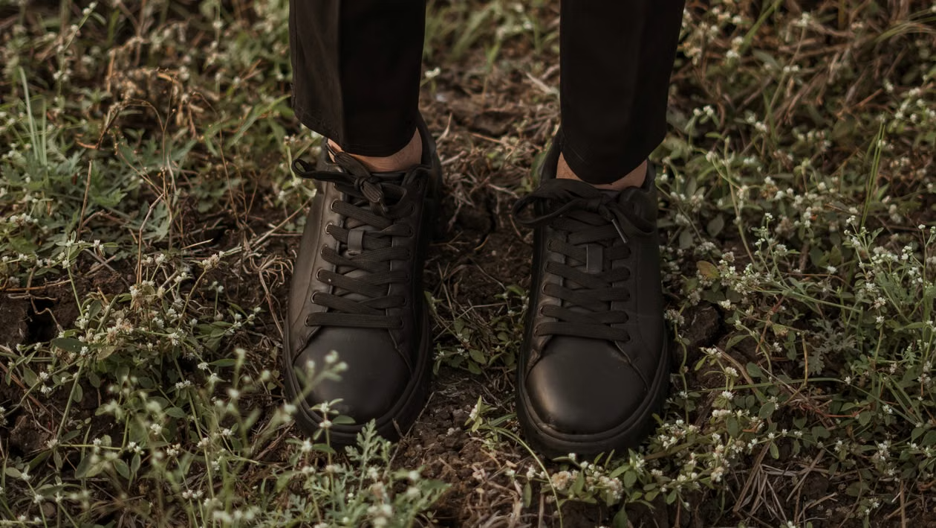
There was a time, not long ago, when a well-dressed man’s options ended at the ankle in polished leather. Oxfords for the office, derbies for something looser, loafers for summer. Sneakers had their place, and that place was a gym bag or a Saturday errand. The idea that a sneaker could sit next to a tailored jacket – on a runway, in a boardroom, at a wedding reception – would have struck most men as a category error.
And yet here we are. The luxury sneaker is now one of the most established pieces in modern menswear, worn with suits, photographed at fashion weeks, and priced like the dress shoes it quietly replaced. How the most casual shoe in the wardrobe became a status symbol is one of the stranger stories in recent fashion – and it says a lot about where men’s style is heading.
Where the shift started
The groundwork was laid in the 2000s, when fashion houses began treating the sneaker as a design object rather than sports equipment. What started as a novelty hardened into a category once streetwear collided with high fashion in the following decade. Suddenly the sneaker wasn’t borrowing credibility from luxury – it was lending credibility to it.
The same pattern has repeated across footwear again and again: a functional shoe crosses into fashion once someone takes its construction seriously. It happened with skate shoes crossing into streetwear, with work boots before that, with tennis shoes before that. The luxury sneaker followed the same road – it just went further up the wardrobe than anyone expected.
Why tailoring made room
None of this would have mattered if menswear itself hadn’t changed underneath it. Dress codes relaxed. Offices that once required a suit stopped requiring a tie, then stopped requiring the suit. Smart casual went from being a confusing invitation footnote to the default way most men dress for most things.
That shift created a genuine gap: men needed footwear that could hold its own next to tailoring without the formality of an Oxford. The luxury sneaker filled it almost perfectly – casual in silhouette, serious in execution. It became the shoe for every occasion that sits between the two extremes, which today is most occasions. Anyone trying to master that in-between register – the territory most street style guides now spend their time on – ends up at the same conclusion: the shoes carry more of the look than anything else.
What separates the real thing from a dressed-up trainer
Here’s where the category splits in two, and where the word “luxury” starts doing real work – or stops meaning anything at all.
Plenty of expensive sneakers are ordinary sneakers with a logo and a markup. The construction underneath is the same as the mass-market version: synthetic linings, glued assembly, foam where structure should be. The price signals luxury; the shoe doesn’t.
The genuine article borrows from traditional shoemaking instead. Full-grain leather uppers. Leather linings rather than fabric. Stitched construction where cheaper shoes rely on adhesive alone. Some of the best examples include details most sneakers have never had – a supportive shank in the midsole, a fixture of quality dress shoes that almost never appears in casual footwear. A small number of workshops build to this standard, mostly in Italy, mostly in low volumes – J.C.LUTZ, which makes each pair to order at an atelier, is a good example of how far the construction side of the category has come. The difference isn’t visible from across the room. It shows up in year three, when the shoe still holds its shape.
That’s the honest definition of a luxury sneaker: not what’s printed on it, but what’s inside it.
The status shift
Which points to the more interesting change – what these shoes now signal. A suit used to do that work on its own. Today, when formality is optional almost everywhere, dressing well is less about meeting a standard and more about making choices. The man in a quiet, beautifully made sneaker is signaling that he knows the difference between price and quality, between a logo and a reason. Making a statement through fashion used to mean volume. Increasingly, it means precision.
That’s a very different kind of status symbol than the sneaker culture of the 2010s produced – less about scarcity and hype, more about the confidence of someone who no longer needs either.
Where it goes from here
The luxury sneaker has outlived every prediction of its decline, mostly because it stopped being a trend and became infrastructure. It sits in the modern wardrobe the way the loafer settled in decades ago: a former outsider that earned a permanent place by being genuinely useful.
The runway put it there. The way men actually live is what keeps it there.
