

The Fast-Fashion Linen Scam: What I Learned Checking Labels This Spring

I spent last weekend hunting for a simple, breathable dress, and what I found in the stores completely frustrated me. Everyone wants to look effortlessly put-together in the heat. But with natural fabrics trending so hard right now, manufacturers are aggressively cutting corners just to pump out inventory.
Walk into almost any high-street store this spring, and you will find racks packed with cheap “linen” dresses. The problem? Most of them are terrible. They are scratchy, completely see-through, and completely lose their shape the second you run them through the wash. To make matters worse, brands are incredibly good at greenwashing, using aesthetic photography and buzzwords like “organic” and “natural” to mask poor-quality manufacturing.
If you want to skip the marketing traps and invest in high quality linen clothes that actually grow softer and more beautiful over time, you need to know how to spot the fakes. Here are three quick physical tests you can do right in the store.
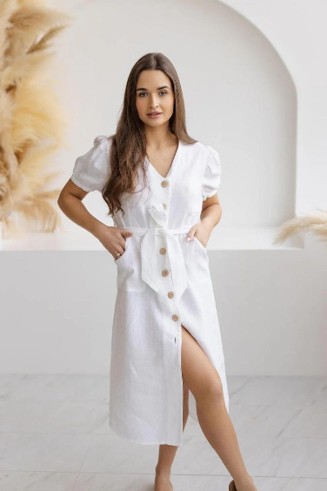
1 – The Window Test
The most common issue with cheap linen is that it is paper-thin. Brands do this to cut material costs, but it leaves you with a sheer garment that requires a slip underneath. That completely defeats the purpose of wearing breathable linen in the heat!
Hold the fabric up to a window or a bright light. You should see a natural, slightly irregular grid pattern of fibers (these are called “slubs”). If the fabric looks totally transparent or the weave is loose like a medical bandage, put it back. Good linen has a substantial, medium weight. It should be dense enough to block the light and stay opaque, while still letting air flow.
2 – The Touch Test
If you touch a linen piece on the rack and it feels surprisingly silky and soft, be suspicious.
Cheap linen is often coated in temporary chemical starch or silicone softeners so it feels nice on the hanger. Once you wash it, those chemicals strip away, leaving you with a stiff garment that feels like sandpaper. Real, premium flax actually has a slightly crisp feel at first. It doesn’t need fake chemical coatings because it is meant to soften naturally, becoming more comfortable with every single wash cycle.
3 – The Inside-Out Test
The fastest way to tell if a brand actually cares about longevity is to check the inside. Because linen is a natural fiber, it inherently wants to fray when it gets cut. This means the seams require serious attention.
Turn the garment inside out and look at the sewing. Fast-fashion factories usually just run a quick, loose serger stitch over raw edges. Give it three washes, and those threads are going to pull right apart. Good labels actually take the time to bind their edges cleanly with French seams or reinforced stitching so the garment doesn’t literally fall to pieces.
Ignore the marketing tags. If you know how to check the fabric’s actual density and inspect the inside stitching, you can easily dodge the cheap knockoffs and find sustainable linen clothing you will actually want to keep wearing next year.
