


Couture & Performance: The Art of Mixing High Fashion with Athletic Staples
The lights dim, the bass kicks in, and a model walks out wearing a structured wool coat — paired with trail-running sneakers featuring mud-toned panels. This was Balenciaga several seasons ago, and it summed up a shift that had been building for years. High fashion and athletic wear are no longer treated as opposites pulling in different directions. They have become collaborators, each lending the other something it lacked: couture brings structure and intention, sportswear brings ease and function. Sacai has built entire collections around this contrast, hybridizing tailoring with technical fabrics in ways that feel deliberate rather than accidental.
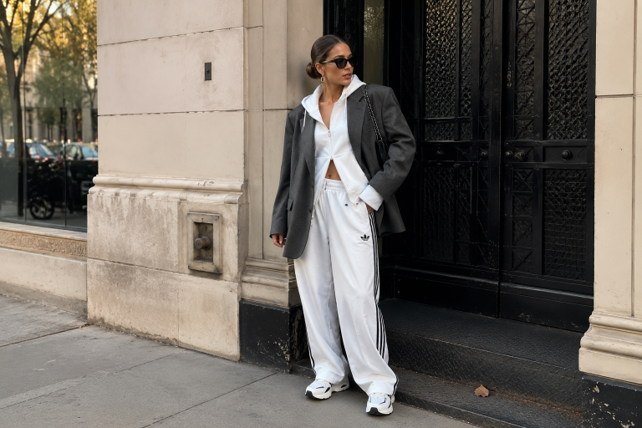
This is not a passing styling trick. It reflects how designers increasingly think about clothing — as something that needs to perform and to communicate, often within the same outfit. Understanding why this matters means looking at the history, the wardrobe pieces, the styling logic, and the people who pushed it forward.
The Perfect Gift for a Fashion Enthusiast: Experience Over Objects
Buying for someone deeply into fashion is rarely simple. A safe sweater might miss the mark; a trendy item might already feel outdated to them by the time it’s unwrapped. The most reliable gift, in these cases, tends to be the option to choose. This holds especially true within niche categories like athletic-luxury crossover style, where personal taste varies wildly from one person to the next.
A gift voucher solves this gracefully. It signals that the giver understands the recipient’s interest without pretending to know every brand preference or size detail. For someone drawn to the sport-meets-style aesthetic, a voucher 4f offers exactly that kind of freedom — the chance to pick a piece that fits both their wardrobe and their evolving sense of style, rather than receiving something chosen on their behalf. It’s a practical answer to an often-overcomplicated question.
Where the Runway Meets the Track: A Brief History of Athletic Couture
This blending of worlds has deeper roots than most people assume. Coco Chanel started pulling jersey knit — a fabric until then reserved for underwear and sportswear — into women’s wear in the 1920s, prioritizing movement over rigid structure. Decades later, Yves Saint Laurent continued that thread, building silhouettes from jersey that moved with the body instead of against it.
The term “athleisure” itself didn’t appear until the 1990s, coined to describe a growing habit: people wearing performance gear outside the gym, treating it as everyday clothing rather than clothing reserved only for workouts. Hip-hop culture accelerated this further, elevating sneakers, tracksuits, and branded sportswear into symbols of status and identity, long before luxury houses caught up.
By now, the convergence is measurable. According to Euromonitor, the global sportswear market has surpassed $300 billion worldwide, steadily absorbing territory once held exclusively by formal fashion categories. What began as a practical fabric choice has turned into one of the defining aesthetic forces of contemporary design.
Key Pieces That Bridge Both Worlds: Building Your Hybrid Wardrobe
A handful of pieces consistently show up at this intersection, each one doing double duty between comfort and statement:
– Oversized bomber jacket — works as a layering piece over tailored trousers, instantly loosening up a formal outfit.
– Track pants with satin detailing — the technical cut stays, but the fabric shift signals intentional styling rather than gym wear.
– Statement sneakers, whether chunky or inspired by archival releases, anchor an outfit and read as a deliberate choice rather than an afterthought.
– Structured hoodie — cut with sharper shoulders or a longer hem, it bridges casual comfort with a more tailored silhouette.
– Mesh or neoprene dress — borrows technical textiles to create shape and movement that traditional fabrics can’t replicate.
– Athletic-inspired outerwear, particularly pieces from collaborations like Nike x Comme des Garçons, Adidas x Stella McCartney, or New Balance x Aimé Leon Dore, which were designed from the outset to live in both worlds.
None of these require a complete wardrobe overhaul. Most function as the one hybrid piece that reframes everything else around it, turning a fairly basic outfit into something with more visual weight and a clearer point of view, without forcing a full closet replacement.
Styling Rules Worth Breaking: How to Mix Without Losing Coherence
Mixing these categories well comes down to a few flexible principles rather than strict formulas. The first is balance: pairing one clearly couture element with an otherwise neutral athletic base keeps the outfit from feeling cluttered or competing with itself. The second involves texture contrast — glossy satin against matte fleece, or silk layered near technical mesh, creates visual interest without needing additional color or pattern.
The third approach treats a monochrome athletic look as a canvas, letting structured accessories or sharply cut outerwear do the talking. A single tailored blazer over an all-black tracksuit, for instance, can shift an outfit from “gym-adjacent” to genuinely considered — something often seen at industry events, where this combination stands out precisely because it feels effortless rather than overworked.
Fashion editors at outlets like i-D have pointed to a similar approach: that restraint, more than abundance, is what makes hybrid dressing read as confident rather than chaotic. The goal isn’t following a checklist — it’s developing an eye for when one element is enough.
Icons Who Defined the Aesthetic: Designers and Figures to Study
A few names consistently come up when tracing this aesthetic back to its source. Demna Gvasalia, through his work at Balenciaga, built a career on deconstructing sportswear — exaggerating sneaker silhouettes and technical outerwear until they read as high fashion statements, particularly visible in collections such as Balenciaga SS19. These ideas became central to the brand’s identity. Virgil Abloh, first through Off-White and later at Louis Vuitton, worked deliberately at the seam between streetwear and luxury, treating both as equally valid design languages rather than opposing tiers.
Miuccia Prada approached the crossover with more intellectual restraint, using sport-derived fabrics like nylon to question what luxury materials were supposed to look like. Rihanna, through Fenty, became both a wearer and architect of this aesthetic, shaping how a mainstream audience understood the sport-luxury pairing. Kim Jones, in his menswear work at Dior, brought technical fabrics and sneaker culture into a house traditionally associated with formalwear, proving the aesthetic could sit comfortably even within heritage labels.
Studying these figures offers more than inspiration — it gives a working vocabulary for understanding why certain combinations succeed where others feel forced.
From Campus to Catwalk: Applying This Aesthetic in Everyday Life
None of this requires a runway budget. A thrifted bomber jacket paired with one well-chosen investment sneaker can capture the same logic seen on professional collections, just scaled to a real closet and a real budget. Building a small capsule — two or three hybrid pieces that mix easily with existing basics — tends to work better than chasing every trend piece at once.
For anyone documenting their style, whether for a portfolio or simply their own archive, this aesthetic offers plenty to work with: it photographs well, it tells a story, and it rewards a bit of experimentation. Fashion, at its core, functions as a language, and athletic couture is one of its boldest dialects — equal parts movement and statement, worth learning to speak fluently.
