

How to Choose an Engagement Ring Setting for Everyday Wear
The engagement ring is perhaps the most beautiful part of taking a relationship to the next level. Not surprisingly, Americans are willing to spend a hefty sum on this precious piece of jewelry. A survey cited in a 2025 Rapaport article showed that US consumers shelled out an average of $5,493 on them, an increase of 2% from the previous study in 2023.
When it comes to the reasoning, 30% of consumers said that they prioritized the quality of the diamond or gemstone. The size of the stone came in next, followed by the design or style. Choosing an engagement ring involves more than selecting a beautiful center stone. The setting determines how secure the stone is, how comfortable the ring feels, and how often it needs care. It also decides how well the ring suits daily life.
The ideal setting depends on the wearer’s lifestyle, preferences, and center stone. The best choice is a setting that looks beautiful now and remains practical for years of regular wear. In this article, we will share a few recommendations that can help you pick the right ring setting.
Compare Different Ring Settings to Begin With
The first step is to understand the different engagement ring settings. Each of these popular ones has its upsides and downsides, and knowing them will help you decide the ideal one based on your everyday lifestyle.
– Solitaire: This is a classic setting that keeps attention on the center stone. Its simple band is relatively easy to maintain, although exposed prongs may catch on clothing or surfaces.
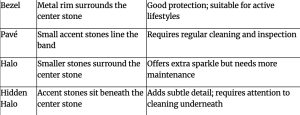
– Bezel: In this setting, a metal rim surrounds the center stone, offering additional protection against everyday knocks and reducing snagging. However, the metal can conceal part of the stone’s edge.
– Pavé: Small accent stones set along the band create additional sparkle and visual detail in this setting. The drawback is that smaller stones and their settings require regular inspection and careful cleaning.
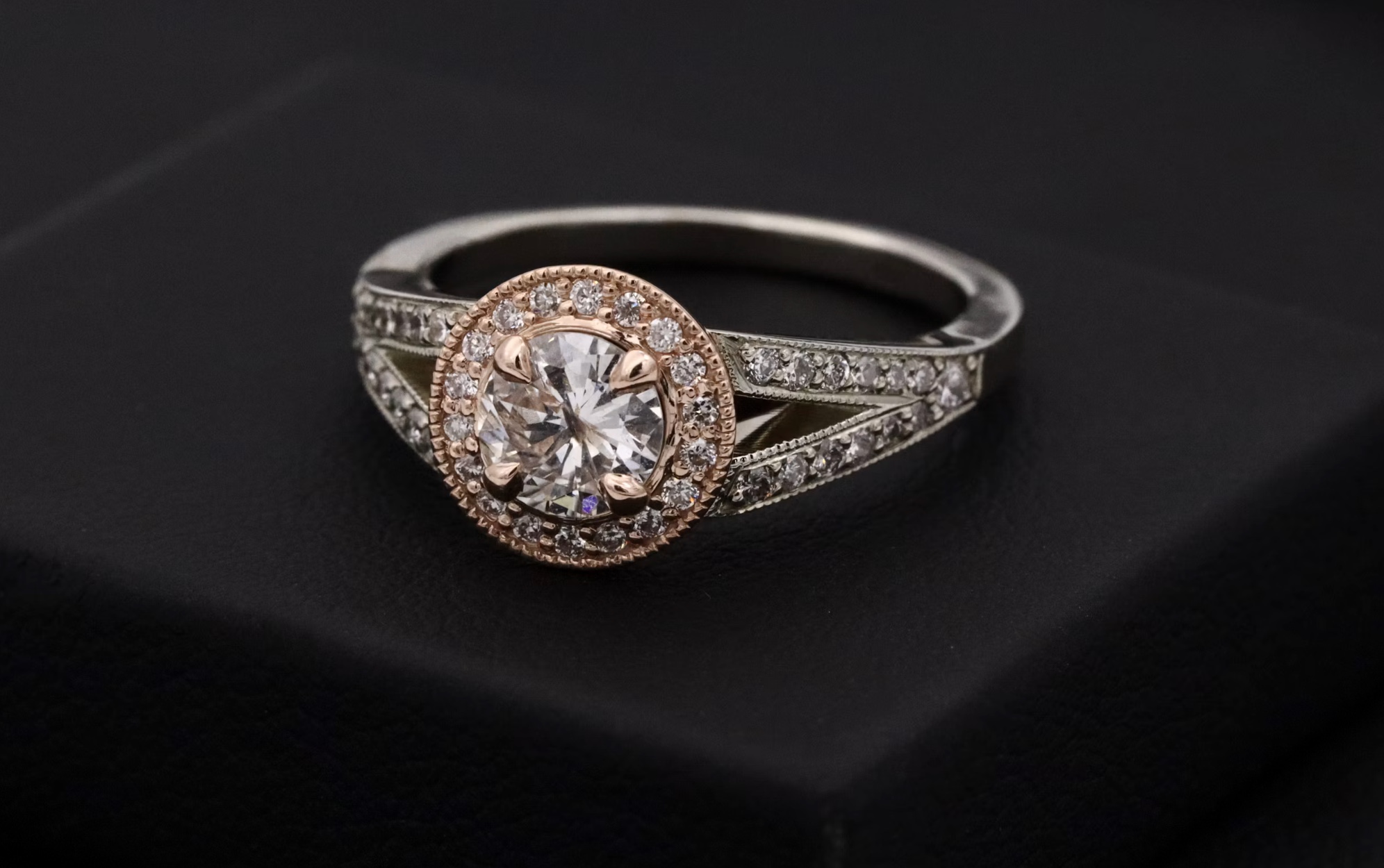
– Halo: A halo setting features a circle of smaller stones surrounding the center stone, creating a more prominent appearance. Its intricate design can collect dirt and require more maintenance.
When comparing engagement ring settings, it’s worth looking beyond the top view and considering details beneath the center stone. A hidden halo engagement ring, for example, features smaller accent stones positioned below the center stone, creating a different appearance from traditional halo designs.
Fine jewelry brand TOVAA offers a helpful guide explaining how hidden halo settings work and what to consider when choosing one. Knowing the essentials such as durability and maintenance requirements will enable you to go for this setting more confidently.
Look Beyond Appearance and Consider the Details
Setting height matters as much as the design of the engagement ring. A high-profile setting lifts the center stone higher, making it more noticeable. However, it can also catch on clothing and knock against countertops, doors, or equipment. A low-profile setting, conversely, sits closer to the finger. This reduces snagging and makes the ring more comfortable for people who use their hands frequently.
Prong placement, shape, and number deserve attention, as they affect security and comfort. Four prongs expose more of the stone, while six prongs provide additional support. If a prong is damaged in a four-prong setting, the stone is vulnerable to falling out. Rounded, polished prongs are generally more comfortable than sharp edges.
The side profile, gallery, and under-gallery also influence everyday performance. A well-designed gallery supports the stone, allows light into the setting, and leaves enough space to clean beneath the center stone. A very high basket or ornate under-gallery is not recommended for busy wearers. It can trap lotion, soap, and debris, while a low, open design is usually easier to maintain.
Match the Setting to Your Lifestyle
An article in The Knot highlights the importance of choosing an engagement ring setting that aligns with your lifestyle. Since you will wear this piece daily, it should be a good match with your lifestyle. You should be able to wear it comfortably all the time without stressing about whether or not it will fall off or break. You shouldn’t have to worry whether you constantly work with your hands or wear medical gloves for hours.
For example, healthcare workers, teachers, cooks, athletes, and people with hands-on jobs benefit from smooth edges, secure stone protection, and a low profile. A bezel or low-set solitaire can minimize the risk of catching and impact exposure during busy days.
For those with physically active routines, a secure fit, comfortable band proportions, and no sharp edges are ideal. A ring that spins, pinches, or sits too loosely can feel uncomfortable and may be more likely to sustain damage. The band should feel secure without being tight, because fingers can change size with temperature, exercise, and time of day.
Factor in Cleaning and Maintenance
According to a Vogue feature, cleaning your engagement ring periodically can maintain its luster over the years. While diamonds can retain their shine for thousands of years, everyday wear can cause grime buildup and affect their shine. The good thing is that a simple DIY cleaning routine is often enough to prevent this.
Notably, maintenance requirements vary widely by setting. A simple solitaire has fewer crevices and no accent stones, making it relatively easy to clean. A bezel also has a straightforward design, but the metal rim can collect residue along its edge. Pavé and halo settings require more attention because their small stones and narrow channels create places for soap, lotion, dust, and residue to accumulate over time.
Use gentle cleaning methods for routine cleaning. Soak the piece in warm water and mild dish soap, and clean it with a soft brush. Avoid aggressive scrubbing around delicate accent stones, and have a jeweler professionally clean and inspect intricate settings once in a while. Long-term durability also depends on metal choice and craftsmanship. Before buying, consider whether you are comfortable with the ongoing care a detailed design setting requires.
Work With a Jeweler to Customize
Glossy Magazine highlights the celebrity trends fueling the engagement ring choices among consumers. Selena Gomez showcased her marquise diamond engagement ring on social media, garnering 23 million likes. Zoë Kravitz’s cushion-cut diamond Jessica McCormack ring also made this cut popular.
Besides lifestyle-related factors, these celeb-endorsed trends have led to an increase in the demand for custom ring designs. A jeweler can help match the setting to the center stone’s shape, size, proportions, and overall appearance. For example, an elongated oval or pear shape may need protective prong placement at the pointed ends, while a round stone may suit a classic four- or six-prong head.
Lab-grown diamonds and moissanite can be used in popular settings, such as solitaire, bezel, pavé, and halo designs. The important factor here is proper engineering. The jeweler should account for the stone’s exact dimensions, proportions, cut, and mounting requirements rather than forcing it into a generic setting. Customization allows the ring to reflect personal style without overlooking practical needs.
FAQs
What is the most comfortable engagement ring setting for everyday wear?
Low-profile solitaire and bezel settings are often practical choices for everyday wear because they sit closer to the finger and are less likely to snag. Comfort also depends on band width, smooth edges, ring proportions, and a secure but not tight fit.
Which engagement ring setting requires the least maintenance?
Simple solitaire and bezel designs generally require less maintenance because they have fewer accent stones and crevices. Pavé and halo settings require more frequent cleaning and inspection because dirt can collect around their smaller stones.
Can you use the same engagement ring settings for lab-grown diamonds and moissanite?
Yes. Lab-grown diamonds and moissanite can be set in solitaire, bezel, pavé, and halo designs. A jeweler should tailor the mounting to the stone’s dimensions, cut, proportions, and security needs.
Engagement Ring Settings: A Quick Comparison

The best engagement ring setting is the one that suits both the wearer’s style and real-life routine. Before choosing it for your ring, don’t just fall for the aesthetics. Consider details such as setting height, prong design, band comfort, cleaning access, and wedding-band fit. Working with a reputable jeweler to customize the setting around the chosen center stone helps create a ring that is beautiful, secure, and comfortable for everyday wear.
