

Dress the Room From the Ceiling: Choosing a Chandelier With Personal Style
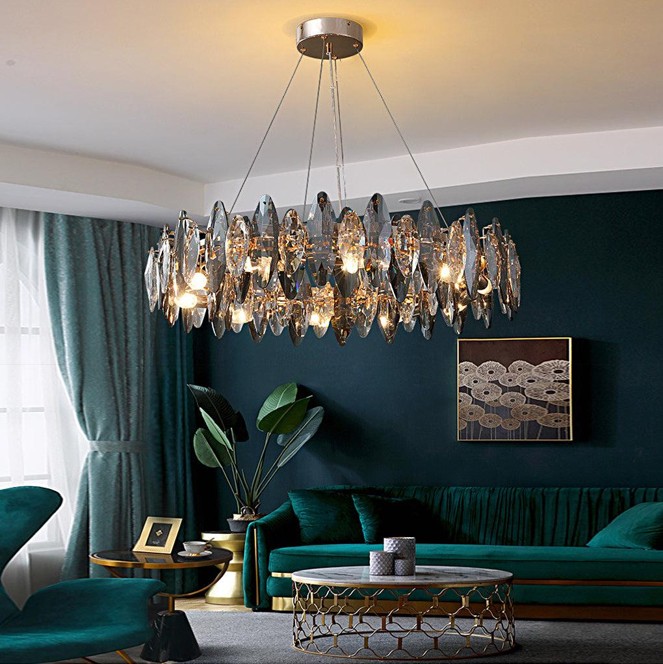
A chandelier has more in common with a great accessory than most people realize. It can sharpen a simple room, soften a formal one, or give an otherwise neutral space a clear personality. Like jewelry, however, it works best when it relates to what surrounds it. A dramatic piece cannot rescue a room whose proportions and practical needs have been ignored.
The useful question is not simply, “Is this chandelier beautiful?” It is, “Does it make sense with the way this room is dressed?” Thinking like a stylist makes that decision easier. Start with silhouette, consider the materials already present, and leave enough visual breathing room for the main piece to be noticed.
Begin With Silhouette, Not Decoration
When choosing clothes, the outline is often noticeable before the fabric or detail. Lighting works in much the same way. A long linear chandelier emphasizes the length of a dining table, while a round fixture gives a square room or circular table a more balanced center. A branching design creates movement, and a tiered chandelier draws attention to ceiling height.
Look at the room from its main entrance and reduce everything to basic shapes. Is the furniture mostly low and horizontal? Are the windows tall and narrow? Does the dining table have sharp corners or a softer oval form? The chandelier does not need to copy every line, but it should either repeat one important shape or provide an intentional contrast.
Scale matters as much as shape. A small fixture over a long table can look like a delicate necklace worn with an oversized coat—it may be lovely on its own, yet it disappears in the complete composition. Use painter’s tape, cardboard, or even an open umbrella to visualize the proposed width before ordering.
The sparkle feels deliberate because the surrounding colors and furniture remain controlled.
Treat Crystal Like Statement Jewelry
Crystal lighting is sometimes dismissed as too traditional, but that judgment usually comes from picturing one specific type: a crowded fixture with curved arms, candle bulbs, and countless hanging drops. Contemporary crystal chandeliers can be linear, geometric, smoky, restrained, or paired with black and brushed-metal frames.
The key is deciding how much sparkle the room can carry. If the walls are richly colored, the upholstery is velvet, and the artwork is already bold, a simpler crystal silhouette may provide enough contrast. In a pale, minimally furnished room, a layered fixture can supply the detail that would otherwise be missing.
Think about crystal as you would a statement necklace. It does not require every other element to match, but it benefits from a few quiet connections. A brass frame can relate to cabinet hardware. Smoky glass can echo charcoal upholstery. Clear drops may pick up the shine of a mirror without forcing the rest of the room into a glamorous theme.
Modern Does Not Have to Mean Cold
Modern chandeliers are often associated with black rings, straight bars, and integrated LEDs. Those elements can look crisp, but the room does not have to feel severe. A geometric fixture becomes warmer when placed above a wood table, beside textured curtains, or against a softly colored wall.
When exploring modern chandeliers, pay attention to the negative space within the design. An open ring or branching frame allows sightlines to continue through the fixture, which is useful in open-plan rooms. A dense sculptural design has more visual weight and may work better where the chandelier needs to define a specific zone.
This is similar to tailoring. A clean jacket is not interesting because it has no detail; it is interesting because each line is deliberate. A good modern chandelier should appear simple from across the room while revealing thoughtful joints, finishes, and proportions when viewed more closely.
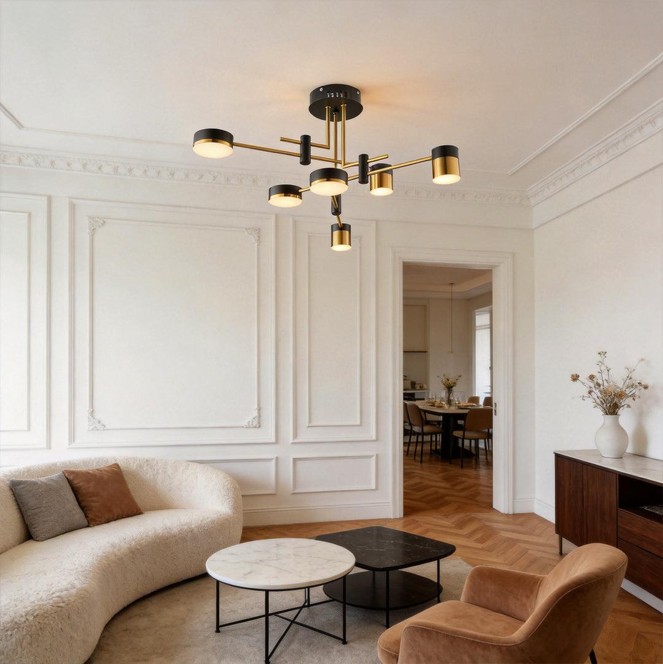
The branching form adds energy while its black and gold finish connects with the room’s quieter details.
Repeat a Detail, Not the Entire Fixture
A room can feel overdesigned when every metal finish is identical and every curve is repeated. Coordination is more convincing when it is slightly relaxed. If the chandelier has a black frame, it may be enough to repeat black in the window frames or chair legs. A gold accent could appear once more in a picture frame or table object.
The same principle applies to texture. Faceted crystal already creates visual movement, so nearby fabrics can be matte and calm. A smooth ring chandelier may benefit from boucle, linen, wood grain, or a patterned rug below it. Contrast gives each material a clearer role.
Avoid introducing several competing statement pieces at the same height. A chandelier, oversized artwork, dramatic curtains, and a tall display cabinet can all be beautiful, but they need space between them. Decide what should attract attention first when someone enters. Let the remaining pieces support that moment rather than compete with it.
Check the Chandelier in Daylight and at Night
A chandelier is part of the room even when it is switched off. During the day, its frame, cables, crystals, and shadows become decorative elements. Stand near the windows and check whether the fixture blocks an important view or appears visually heavy against natural light.
At night, judge the quality of illumination rather than the fixture alone. Does it light faces comfortably across the dining table? Can it be dimmed for a quieter evening? Are bright LEDs or bare bulbs visible from the sofa? A chandelier that looks elegant in a photograph may be tiring if the light source sits directly in your line of sight.
Take a few phone photographs during both conditions. Images make imbalance surprisingly easy to spot. You may notice that the chandelier hangs slightly off-center relative to the table, even if it is technically centered in the room. In many dining spaces, centering it over the furniture creates a more convincing composition.
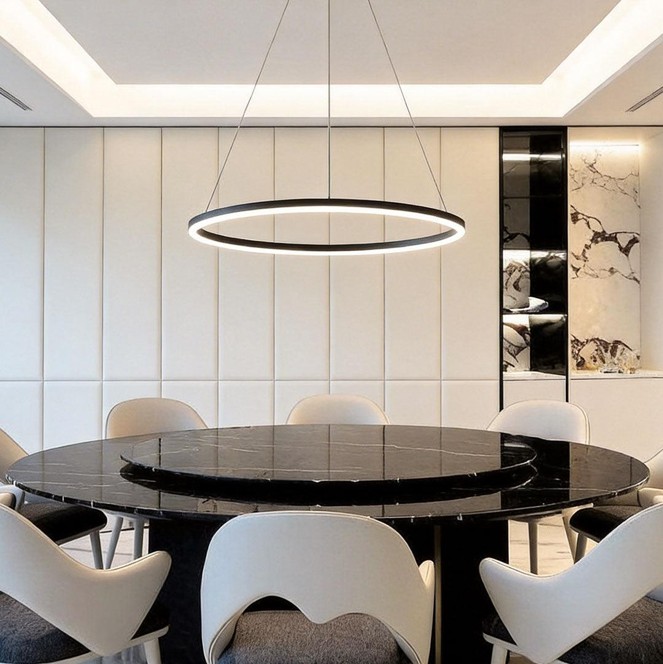
A simple silhouette can still make a strong statement when its scale follows the table beneath it.
Do the Practical Fitting Before the Final Styling
Like an altered garment, a chandelier only looks effortless after the fit has been handled properly. Confirm the ceiling height, fixture weight, suspension range, and location of the electrical box. Heavy crystal designs may require additional ceiling support, while wide fixtures need sufficient clearance from doors, cabinets, and walking routes.
Installation should be completed by a qualified professional, particularly when the fixture is large, heavy, or being moved to a new ceiling position. Ask about dimmer compatibility before the work begins. It is frustrating to discover afterward that the desired lighting control requires a different driver, bulb, or switch.
The most stylish choice is rarely the loudest one. It is the chandelier whose proportions feel natural, whose materials relate to the room, and whose light suits ordinary evenings as well as special occasions. When those details align, the fixture does what a well-chosen accessory does: it gives the whole look a point of view.
