

Fashion’s New Status Symbol Isn’t Fur Anymore
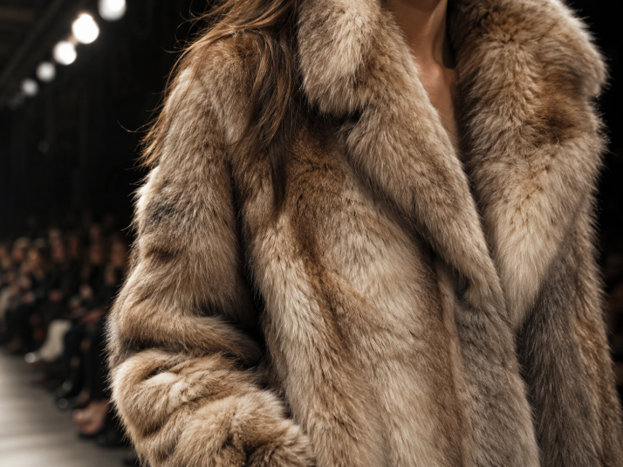
Starting with the September 2026 shows, the Council of Fashion Designers of America will no longer allow real animal fur on any official New York Fashion Week runway. Mink, fox, chinchilla, rabbit — all of it is off the calendar, with an exception only for fur obtained through Indigenous subsistence hunting. For more than a century, fur was the fastest way for someone to signal that they’d arrived. So the more interesting question isn’t whether fashion can survive without it. It’s what’s quietly taken its place.
Fashion’s New Status Symbol Has an Old Job Description
From Studio-Era Glamour to Lagerfeld’s Fendi Excess
Fur did this job long before fashion weeks existed. Medieval sumptuary laws restricted ermine and sable to royalty and clergy, turning pelts into a literal marker of rank centuries before anyone called it a status symbol. By the 1920s through the 1950s, Hollywood inherited that signaling power: studios gifted mink and silver fox to their biggest stars, and actresses like Marlene Dietrich and Joan Crawford wore them as a visible receipt of stardom rather than a practical choice against the cold. Karl Lagerfeld pushed that same logic to its limit at Fendi decades later, building entire collections around dozens of pelts stitched into a single coat. Whether the decade was the 1500s or the 1980s, the message stayed identical — more fur meant more money, more access, more proof that you belonged somewhere most people couldn’t get into.
The Ban That Forced an Answer
What NYFW’s 2026 Rule Actually Covers
The CFDA’s policy, announced in December 2025, bars fur from animals farmed or trapped specifically for their pelts — mink, fox, rabbit, chinchilla, coyote and raccoon dog — from any collection shown on the official NYFW calendar, with the single exemption covering fur obtained through Indigenous subsistence hunting traditions. The rule doesn’t just affect the runway itself; it extends to NYFW’s own communications and social channels, so brands can’t promote fur even where they technically still use it. New York is actually a late arrival to this particular rule, not an early one: London, Copenhagen, Berlin, Stockholm, Amsterdam, Helsinki and Melbourne had already pulled fur from their own official schedules before NYFW followed. The CFDA has framed the move as part of a broader effort to position American fashion as a leader on animal welfare, while pushing designers toward material innovation rather than treating the ban as a simple subtraction.
Which Houses Already Made the Leap
Plenty of major names got there ahead of the policy. Kering announced in 2021 that all of its houses would stop using animal fur from the Fall 2022 collections, bringing Gucci, Saint Laurent, Balenciaga and Bottega Veneta under one group-wide position. Armani had already excluded fur and added angora to its restricted materials from the Fall/Winter 2022–23 season, rather than treating the 2026 NYFW rule as the trigger. Stella McCartney has built her brand around refusing fur since its launch, framing fur-free fur as a design choice rather than a downgrade. Fendi remains a more complicated case: as part of LVMH, it has explored lab-grown, keratin-based fur fibres with Imperial College London and Central Saint Martins, but that research should be presented as material experimentation, not a full fur-free commitment.
Three Things Now Doing Fur’s Old Job
Status symbols don’t disappear just because one material gets pulled from the runway. They migrate to whatever still does the same signaling job. Right now, three different answers are competing to inherit fur’s old role, and they don’t all look or work the same way.
Lab-Grown and Bio-Based Furs
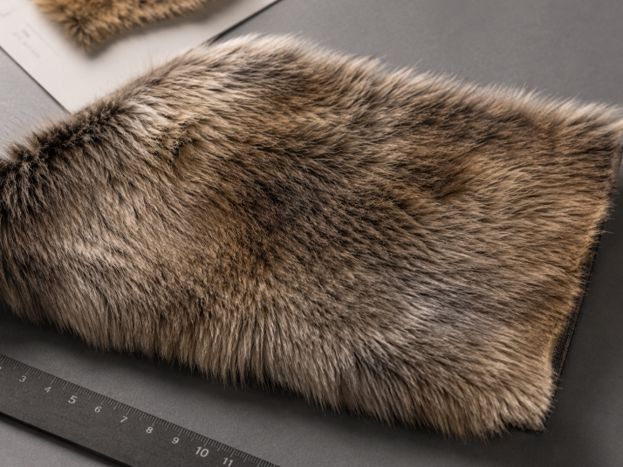
The most direct successor is not simply cheaper faux fur, but engineered pile with a more credible surface. Sorona, a corn-derived fibre used with Ecopel in Koba, helped create one of the early commercially available bio-based faux fur options; it still belongs in the wider conversation about synthetics, recycled polyester and scale, not a clean one-for-one environmental fix. As a design material, though, high-pile faux fur now has a different role than the flat acrylic versions many people associate with costume racks. The point is no longer whether it imitates mink perfectly. The question is whether texture, movement and sourcing can carry the same visual authority without using new animal pelts.
Visible, Hand-Finished Craftsmanship
A second answer skips synthetic fur altogether and leans into visible labor instead. Recent luxury collections have pushed tapestry-like surfaces, sculptural ruffles, hand-applied trims and engineered texture to the front of the look, treating construction as the story rather than a backdrop. The signal here isn’t that a piece used a lot of pelts. It is that the piece shows a level of craft you can’t rush or fake cheaply, and that can read as status just as clearly once the viewer knows what to look for.
Inherited and Vintage Fur as a Loophole
The third answer is the one nobody had to invent: real fur that already exists. As secondhand and vintage shopping have moved from niche to mainstream, some wearers now treat an inherited coat or a vintage-shop find differently from a new runway purchase. The appeal is provenance rather than fresh consumption. That distinction is not universally accepted, but it explains why vintage fur can still appear in fashion circles even as new fur loses institutional approval.
What Fashion’s New Status Symbol Means for How You Dress Now
None of this means the instinct toward texture and drama is going away. It means the source of that texture now matters more than the texture alone. For stylists building a portfolio or design students putting together their first independent pieces, that shift is useful: status now rewards deliberate sourcing over expensive sourcing. Retailers such as Global Fabric Wholesale make it easier to compare pile, weight, drape and color by the yard before committing to a full garment. The signal that used to read as “I can afford fur” now reads as “I know exactly what I’m working with.”
