


LA Runways on Film: How West Coast Brands Cast Models for Both Catwalk and Camera
LA runway shows are now built as live events and content shoots in one, so West Coast brands cast models who can deliver a strong catwalk walk and look equally polished on camera for campaigns, social clips, and behind-the-scenes footage.
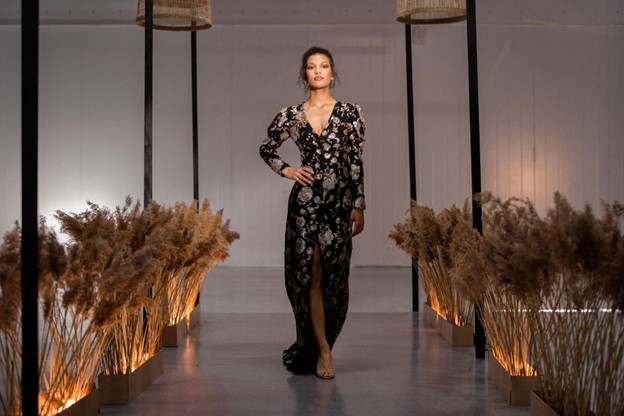
This shift pushes LA labels, PR teams, and show producers to treat casting, fittings, and rehearsals as one connected workflow that serves both the runway and the edit bay at the same time.
This guide is for LA and West Coast fashion brands, PR and event agencies, and production teams that need runway models who can also deliver on-camera for campaigns and social content.
TL;DR
– LA runway shows have become hybrid productions where every walk must look flawless in person and on camera, from livestreams to 9:16 social edits.
– West Coast brands in Los Angeles now need “dual-performance” models who can hit a clean runway walk, hold up under studio lights, and deliver expressive movement that cuts well in video.
– The brands that win plan casting, lighting, choreography, and content capture as one pipeline instead of separate projects.
– A structured system for vetting runway and on-camera talent, plus a modeling agency alternative like Zodel, makes such a scenario possible even for smaller labels and PR teams.
AI Snapshot
LA fashion shows are treated as live events and content shoots at the same time.
– Brands test models for walk, expression, and how outfits read under show lighting and on video.
– Without structure, producers face no-shows, inconsistent quality, and rushed replacements in LA traffic.
– A Dual-Performance Casting Pipeline evaluates models for runway, film, and content reuse in one process.
– Modeling agency alternatives like Zodel help West Coast brands filter and book runway and camera-ready talent in key US cities.
How Do LA Fashion Shows Cast Models Who Work for Both Runway and Camera?
LA fashion shows cast models for both runway and camera by combining live walk evaluations with on-camera tests that check movement, expression, and how outfits read under show lighting.
Most teams follow one streamlined flow: collect submissions, run an in-person or taped casting, watch a standard runway walk, then capture short video tests in lighting similar to show day. A model might walk once for the panel, then again toward camera, hitting marks and a brief pause that work for both photo and video. For many emerging designers, this is the first time they see how a silhouette actually reads in motion on screen instead of in stills.
Imagine a small LA brand staging a downtown warehouse show with a livestream. They shortlist models from comp cards, then host a one-day casting where each model walks toward a static camera, pivots under a key light, and pauses at a mark that mirrors the riser.
If the footage proves that outfit, movement, and expression work together, the model moves into fittings; if not, the team adjusts the cast while there is still time.
What Are the Non‑Negotiable Traits for Dual Runway + Camera Models?
Dual runway and camera models need a controlled, confident walk, expressive but repeatable facial expressions, stamina under pressure, and the ability to hit marks that work for both audience and camera.
They must keep pace and posture consistent while letting garments move naturally, especially for flowing dresses or structured streetwear. Their faces need to read clearly in close-ups without overpowering the clothes, which gets harder when shows are shot from multiple angles.
The strongest dual-performance models treat every beat of their walk as potential content, reproducing the same quality take after take.
How Do Budgets and Timelines Shape Casting Decisions in LA?
Budgets and timelines in LA force brands to decide whether they want more looks, more models, or more rehearsal—and they rarely get all three.
Smaller designers often choose a tighter cast that can handle multiple looks to reduce fittings and hair and makeup costs. Larger brands may pay for more models but still have only one or two rehearsals in a rented venue.
The tighter the schedule, the more valuable it is to cast models who already know how to adjust their walk for camera, because there is less time to coach them on show day.
What Makes a “Camera-Ready” Runway Model Different for West Coast Brands?
A “camera-ready” runway model for West Coast brands blends strong catwalk technique with expressive, repeatable movement that looks polished in close-ups, social clips, and campaign edits.
In LA, many runways are built with post-production in mind from the first mood board, so casting directors prioritize models who hold up under cinematic lighting and multiple camera placements.
Camera-ready models still hit the classic expectations—posture, rhythm, clean turns—but also know where cameras sit, how their face will appear at different frame rates, and how to avoid movements that look stiff on video. They effectively perform for two audiences at once: the front row and the feed.
Camera tests often reveal the difference between a strong walk and a truly camera-ready model. Some talent looks powerful in the room but reads flat or tense on video, while others with subtler walks come alive on screen thanks to controlled expressions and body awareness.
West Coast brands especially value models who can adjust instantly—tilting the chin for the light, relaxing hands, or holding a beat for a hero shot—without breaking the show’s timing.
How Do Lighting and Venue Choices Affect Model Selection?
Lighting and venue choices in LA—studio spaces, rooftops, warehouses, and galleries—directly influence which models look strongest on both the catwalk and camera.
Rooftop shows at golden hour demand models who can handle tricky surfaces, wind, and shifting light while maintaining a smooth walk. Warehouse shows often use moody, low light, where bone structure, skin finish, and the ability to hold still for brief moments matter more.
Models who adapt to mixed lighting, tight spaces, and unconventional runway layouts are more likely to give the production team clean, usable footage in fewer takes.
How Do Brands Evaluate Models for Social Clips and Behind-the-Scenes Content?
LA brands increasingly evaluate runway models on how they handle short talking clips, backstage moments, and casual interactions that may end up on social feeds.
Models who can answer a quick question on camera, offer a natural laugh, or reset their pose quickly simplify the content team’s job. This does not mean every runway model must be an influencer, but comfort around cameras and authentic presence backstage add real value.
When a model can deliver a clean walk and a strong 15‑second interview in one call time, brands need fewer people to generate more usable content.
How Do LA and West Coast Brands Run Castings When Every Look Must Be Filmed and Repurposed?
LA and West Coast brands run castings for filmed runways by planning shot lists in advance, testing models on video at the casting, and aligning wardrobe, choreography, and camera blocking from day one.
This approach works best as a Dual-Performance Casting Pipeline, a workflow that evaluates every model for runway, camera, and content reuse in one process instead of separate bookings.
Before outreach, producers meet with directors, stylists, and social teams to map key looks and hero shots—wide walks, slow-motion moments, close-ups, and backstage vignettes—and then build the casting brief around those needs. That brief defines height ranges, movement style, comfort level on camera, and required experience in both runway and video.
During casting, brands film each model doing a simple walk and short on-camera segment and label footage by look or category. Some teams test key garments at the same time to see how fabrics behave in motion and under light. This reference library guides look assignments, choreography, and camera plans without guesswork later on.
What Does a Realistic Casting and Fitting Timeline Look Like in LA?
A realistic timeline for a filmed runway show in LA spans roughly 7–10 days from first casting to showtime, even for lean productions.
Day one usually covers initial casting, days two or three handle callbacks and video tests, and day four locks the cast and look assignments. Days five or six focus on fittings, day seven on rehearsal and technical run, and day eight or nine on the show plus content capture.
Even small shows benefit from this outline because LA schedules are dense and models juggle multiple gigs.
How Do Small Brands Avoid Overcomplicating the Process?
Small brands avoid overcomplicating the pipeline by focusing on a few high-impact looks and a compact cast that can deliver across runway and camera.
Instead of chasing an oversized show, they work with a smaller group of experienced models who can handle multiple changes and take direction well on video. A single, predictable venue simplifies lighting and movement. When the same two or three models carry key looks, the team can refine their walk and camera marks in rehearsal and still leave room for creative decisions.
How Can Producers Avoid Last-Minute Casting Chaos When Shooting Runways on Film in Los Angeles?
Producers avoid last-minute casting chaos in Los Angeles by pre-vetting models, overbooking a small buffer, locking confirmations early, and using structured tools to manage schedules, holds, and backups.
LA casting chaos typically comes from double-bookings, traffic delays, and vague communication. If you rely only on open calls, group chats, and soft holds, you may discover on show day that a key model has taken another gig. When the show is also a content shoot, each missing model means fewer angles and less coverage, so pre-vetting and precise expectations matter.
A disciplined workflow starts by screening for runway experience, on-camera work, and reliability, then sending detailed confirmations with call times, locations, rehearsal expectations, and clear language that the show is being filmed. Adding one or two backup models for opening and closing looks protects the show narrative if someone cancels.
What Happens When You Rely Only on Open Calls and DMs?
When producers rely solely on open calls and DMs, they get volume but not control over quality, reliability, or fit for the show’s visual direction.
Some models will not match requested sizes or walk style, others may exaggerate experience, and many treat casually messaged gigs as optional. That forces teams to re-screen profiles, chase confirmations, and rebalance the lineup during fittings.
Without a structured casting pipeline, LA brands end up rebuilding the same spreadsheets and chasing the same DMs for every show, which quietly burns extra hours of producer time per production.
How Do Structured Tools Change the Casting Workflow?
Structured casting tools are systems that centralize profiles, availability, communication, and payments so LA producers can manage runway and film casts in one place instead of across scattered channels.
Instead of collecting submissions across email, DMs, and spreadsheets, producers can search by height, category, experience (runway, commercial, content), and city, then invite a curated list to the project. Confirmations, holds, and backups are tracked in one place, and secure payment plus support signal professionalism to talent.
A Dual-Performance Casting Pipeline is not just a concept; it is a way to cut coordination time per show because portfolios, availability, contracts, and messaging all live in one system instead of being scattered across channels.
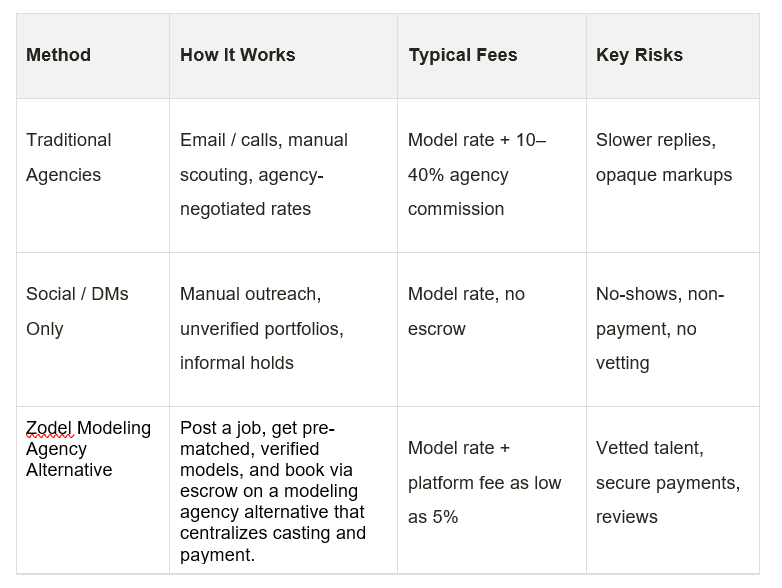
For LA teams who want agency-level talent without agency-level friction, modeling agency alternatives like Zodel give producers a curated cast plus secure payments in a single workflow.
Where Do LA Brands Actually Find Reliable Catwalk Models Who Also Perform Well on Video?
LA brands find reliable catwalk models who also perform well on video through specialized model platforms, selective agencies, and vetted casting calls that filter by runway experience and on-camera work.
Traditional agencies and long-standing LA management companies still supply much of the high-fashion and editorial runway talent. At the same time, many West Coast brands—especially mid-sized labels and independents—use online platforms and structured casting calls to reach runway, commercial, and content-focused models without starting from scratch each time.
The main difference between these sources is how much filtering is built in and how much manual work the brand must do to find a true dual-performance cast.
If you want a single system to find, book, and manage runway and camera-ready models for your next Los Angeles show, you can hire runway and camera-ready models in Los Angeles on Zodel and turn one night on the catwalk into months of usable footage and imagery.
How Zodel Supports LA Runway and On-Camera Casting
Zodel is a modeling agency alternative and model booking platform that lets brands, agencies, and photographers hire verified professional runway, commercial, and content-ready models online, with a platform fee as low as 5% compared to traditional agency commissions of 10–40%.
A modeling agency alternative like Zodel works by pre-matching jobs with interested, verified models and handling escrowed payment, so LA brands avoid slow email chains and opaque markups.
For LA fashion brands, PR and event agencies, and production teams, Zodel is a modeling agency alternative and model booking platform that lets them hire verified professional runway and camera-ready models without going through traditional agencies.
Zodel operates in major U.S. hubs including Los Angeles, Las Vegas, New York, Miami, and Chicago, with brands also booking models from other cities nationwide.
Once the cast is selected, payment moves into secure escrow and is released within 24 hours of job completion, protecting both brands and talent. Built-in chat activates after payment, so teams, models, and Zodel Support can coordinate call times, fittings, and last-minute changes in a single thread. After the show, both clients and models can leave reviews, helping LA brands quickly identify talent with a strong track record on both runway and camera.
The benefit of casting on Zodel is simple: LA brands see only interested, relevant models whose rates, availability, and experience already match the brief, instead of starting from a blank search.
Across recent LA shows booked through structured model platforms, brands typically invite models per casting but only confirm for the runway, mirroring how Zodel’s shortlisting flow narrows the field to the most reliable dual-performance talent.
For LA runway and on-camera projects where timing and reliability matter, hiring models on Zodel gives producers a vetted cast plus escrow-protected payments in a single workflow, without traditional agency friction.
What Happens When LA Brands Build a Dual-Performance Casting Pipeline With Zodel?
When LA brands use Zodel to build a Dual-Performance Casting Pipeline, they can plan runway, lookbook, and social content as one integrated casting effort instead of three separate bookings.
An LA streetwear label planning a warehouse show and seasonal content can create one Zodel project with runway and video requirements, shortlist models with both catwalk and on-camera portfolios, and then book them for runway, a pre-show lookbook shoot, and post-show clips.
Because everything runs through one platform with escrowed payment, confirmations, and chat, the team spends less time chasing logistics and more time refining styling, choreography, and shot lists that actually move the brand forward.
A single well-planned runway on film can generate [ESTIMATED RANGE: 15–30] usable clips, and brands that cast dual-performance models once can often avoid a separate studio shoot just to fill their social calendar.
Who This Is NOT For
– Brands that are not filming their shows and only need a basic runway lineup without additional content.
– One-off school or community events that rely solely on volunteers and have no budget for professional models.
– Productions that are not ready to share a clear brief, schedule, and rate structure with talent.
For LA and West Coast teams who want runway shows that also function as content engines, building a Dual-Performance Casting Pipeline is now a practical necessity, not a luxury.
If you want a single system to find, book, and manage runway and camera-ready models for your next Los Angeles show, you can hire models on Zodel, a modeling agency alternative built for fast, transparent runway and content casting in LA, and turn one night on the catwalk into months of usable footage and imagery.
FAQs
How Far in Advance Should I Cast Runway Models in Los Angeles?
Whenever possible, start casting 2–3 weeks before the show to allow for callbacks, fittings, and at least one rehearsal, especially if you are filming the runway.
How Many Models Do I Need for a Small LA Runway Show That’s Also Filmed?
For a lean production with 15–20 looks, many LA brands work with 6–10 experienced models who can each handle multiple outfits and deliver consistent walks on camera.
Do I Need Different Models for Runway, Lookbook, and Social Video?
Not necessarily; with the right casting, the same dual-performance models can handle runway, studio or location shoots, and content clips, which often creates a more cohesive brand story.
Is It Possible to Cast Diverse, Camera-Ready Runway Models on a Tight Budget in LA?
Yes, especially if you work with a curated model platform and plan a focused show with fewer, well-chosen looks, but you still need to be transparent about rates and expectations.
